Our Pick: Exhale Wellness
Check price →What Is Blue Lotus? The Dreamy Egyptian Flower, Explained (2026)
It's the blue water lily the pharaohs painted on every tomb wall — Nymphaea caerulea, the flower of ancient Egyptian nightcaps and dream rituals. Today it's back as tea, extract, gummies, and smokable flower, and almost nobody has explained it in plain English. So here's the honest version: what it is, what its calming compounds (nuciferine and aporphine) actually do, what people describe feeling, every form you can buy, the genuinely weird legal situation, and the one line that matters most — this is a wine-like mellow and dreamy sleep, not a psychedelic trip.
By The Kind Buds Desk · ~9 min read · Updated 2026-06-12
Which one should you buy?
Don't guess. Answer 3 quick questions and we'll match you to your perfect pick in 20 seconds — from this guide's own tested lineup.
Get my pick★ Our Top Pick
Best Overall
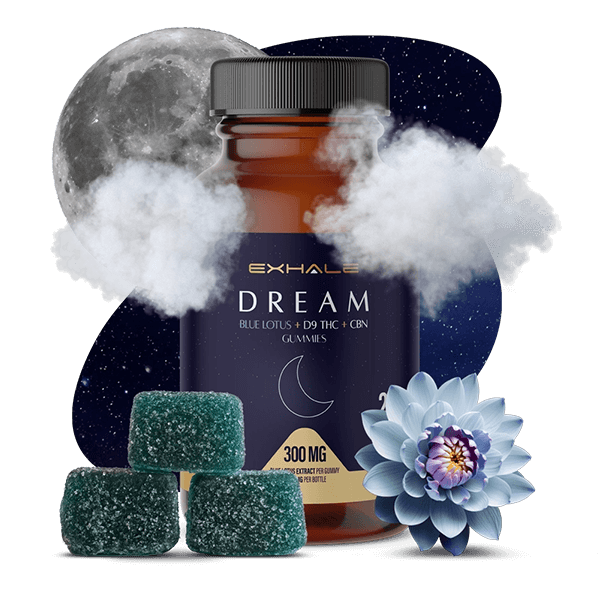
Exhale Wellness Blue Lotus Dream Gummies
A clean, lab-tested blue lotus gummy that pairs the flower with a light nighttime cannabinoid blend.
Not sure yet? Compare all 3 picks below ↓
Blue lotus is one of those plants you've already seen a thousand times without knowing it. If you've ever looked at ancient Egyptian art — the painted tomb walls, the gold jewelry, the papyrus scenes of feasts and ceremonies — that elegant blue flower curling up out of the water is almost certainly Nymphaea caerulea, the blue lotus. (It's actually a water lily, not a true lotus, but the name stuck three thousand years ago and we're not going to win that fight now.) The Egyptians revered it, painted it everywhere, and by most accounts used it to relax, to dream, and to set a mood. After centuries of being mostly a botanical curiosity, it's quietly back — and this time it's sold as tea, extract, gummies, and smokable flower.
Here's the line we want you to read before anything else, because the internet badly muddies it: blue lotus is not a psychedelic, and the experience is not a trip. There are no visuals, no hallucinations, no "journey." What people consistently describe is gentler and stranger than that — a soft, wine-like mellow, a warm heaviness, an easier slide into sleep, and sometimes unusually vivid or lucid dreams that night. If you've had a glass of wine and felt your shoulders drop, you're closer to the right mental picture than if you're imagining mushrooms. Calibrate to "mellow nightcap," not "altered reality," and you'll understand blue lotus correctly.
The reason it's confusing is that blue lotus sits in a genuinely odd spot: federally, it isn't a controlled substance (Louisiana is the lone state exception), yet you'll see it labeled "not for human consumption" — a regulatory quirk we'll explain honestly below rather than pretend it means something sinister. We'll walk through what blue lotus is, the plain-speak version of its active compounds (nuciferine and aporphine — the dreamy, calming ones), every form it comes in and how they differ, the real legal picture, and the safety basics: this is for adults 21 and over, don't stack it with alcohol or other sedatives, give it time, and never drive on it. None of this is medical or legal advice — just the clear, grown-up explainer the topic has been missing.
The short version
- Blue lotus is Nymphaea caerulea, the sacred blue water lily of ancient Egypt — painted across tombs and used in their relaxation and dream rituals for thousands of years.
- Its main compounds are nuciferine and aporphine — the dreamy, calming ones. They're why people describe a gentle, relaxed, mellow feeling rather than anything trippy.
- It is NOT a psychedelic and NOT a trip. Think wine-like mellow plus dreamy, sometimes-vivid sleep — not visuals or hallucinations.
- It comes in several forms — tea, extract/tincture, gummies, and smokable or vapable flower — and each one is searched for and used differently. We break all four down.
- Legality is the weird part: federally unscheduled (banned only in Louisiana), but commonly labeled "not approved for human consumption." We explain that honestly below. 21+, don't mix with alcohol or sedatives, and never drive on it.
| Product | Form | What's in it | Price |
|---|---|---|---|
| Exhale Wellness Blue Lotus Dream Gummies | Gummies | 300 mg blue lotus + 2 mg D9, 10 mg CBN, 10 mg CBG | $89.95 / 30ct |
| BudPop Blue Lotus Dream Gummies | Gummies (nano) | 300 mg blue lotus + 2 mg D9, 10 mg CBN, 10 mg CBG | From $64.95 / 30ct |
| Cheef Botanicals Blue Lotus Gummies | Gummies | 300 mg blue lotus + D9, CBN, CBG blend | See current price |
At a glance — three real blue lotus products people actually buy
The 20-second quiz
Which one should you actually buy?
Skip the scrolling and the second-guessing — answer a few quick questions and we'll match you to your perfect pick, based on how you'll actually use it.
Quick quiz
Question 1 of 1
What matters most to you?
💡 Good to know
Blue lotus is Nymphaea caerulea, the sacred blue water lily of ancient Egypt — painted across tombs and used in their relaxation and dream rituals for thousands of years.
01 · Best Overall
Our PickExhale Wellness Blue Lotus Dream Gummies
A clean, lab-tested blue lotus gummy that pairs the flower with a light nighttime cannabinoid blend.
Pros
- Easiest, most beginner-friendly way to try blue lotus
- Posted third-party lab results (the trust standard)
- Deliberately light, nighttime-leaning cannabinoid blend
- Established hemp brand with a long transparency track record
Cons
- Contains 2 mg THC — not a blue-lotus-only experience, and a no-go if you're tested
- Full jar price is higher up front than loose tea
Bottom line: The most straightforward way to try blue lotus in 2026. Each gummy carries 300 mg of blue lotus extract alongside a deliberately light nighttime blend — 2 mg of D9 THC, 10 mg of CBN, and 10 mg of CBG — from an established hemp brand that posts its lab work. It's a wind-down gummy through and through, and a sensible first taste of the flower.
Key details: Third-party lab results posted per product — the trust standard for a young category.
If you want to try the pharaohs' flower without grinding tea or wrangling tinctures, a tested gummy is the easy on-ramp — and this is the one we'd hand a friend. Exhale Wellness is an established hemp company we've reviewed across the THC aisle, and it brings the same habit here that earned our trust there: post the lab reports where anyone can find them. In a category as young as blue lotus, that paperwork is the whole ballgame.
What does it feel like? We'll stay honest: blue lotus effects are mild and they vary person to person, so we won't promise you a feeling. Many people describe a soft, wine-like mellow and an easier slide into sleep, sometimes with vivid dreams. Because there are 2 mg of THC per gummy here, treat it like any THC edible: start with half, give it a full hour or two, evening only, and never drive. If you want THC fully out of the picture, see the tea section below — the flower on its own contains none.
- Blue lotus per gummy
- 300 mg blue lotus extract
- Also in the blend
- 2 mg D9 THC + 10 mg CBN + 10 mg CBG
- Count
- 30 gummies per jar
- Flavor
- Mixed berry
- COA
- Third-party lab results posted
Who should buy it: Buy this if you're blue-lotus-curious and want the lowest-effort, best-vetted way to find out how it sits with you — and you're comfortable with a small, nighttime amount of THC in the mix. The posted lab work, the established brand, and the deliberately light cannabinoid blend make it the obvious first product for most people.
What we don't like: It isn't a blue-lotus-only experience: the 2 mg of THC, plus CBN and CBG, mean you're not feeling the flower in isolation, and the THC makes it a no-go if you're tested at work or avoiding it entirely. The full jar also isn't cheap up front. If you want pure blue lotus with nothing else, loose tea or a flower-only extract is the cleaner read.
02 · Nano fast-acting
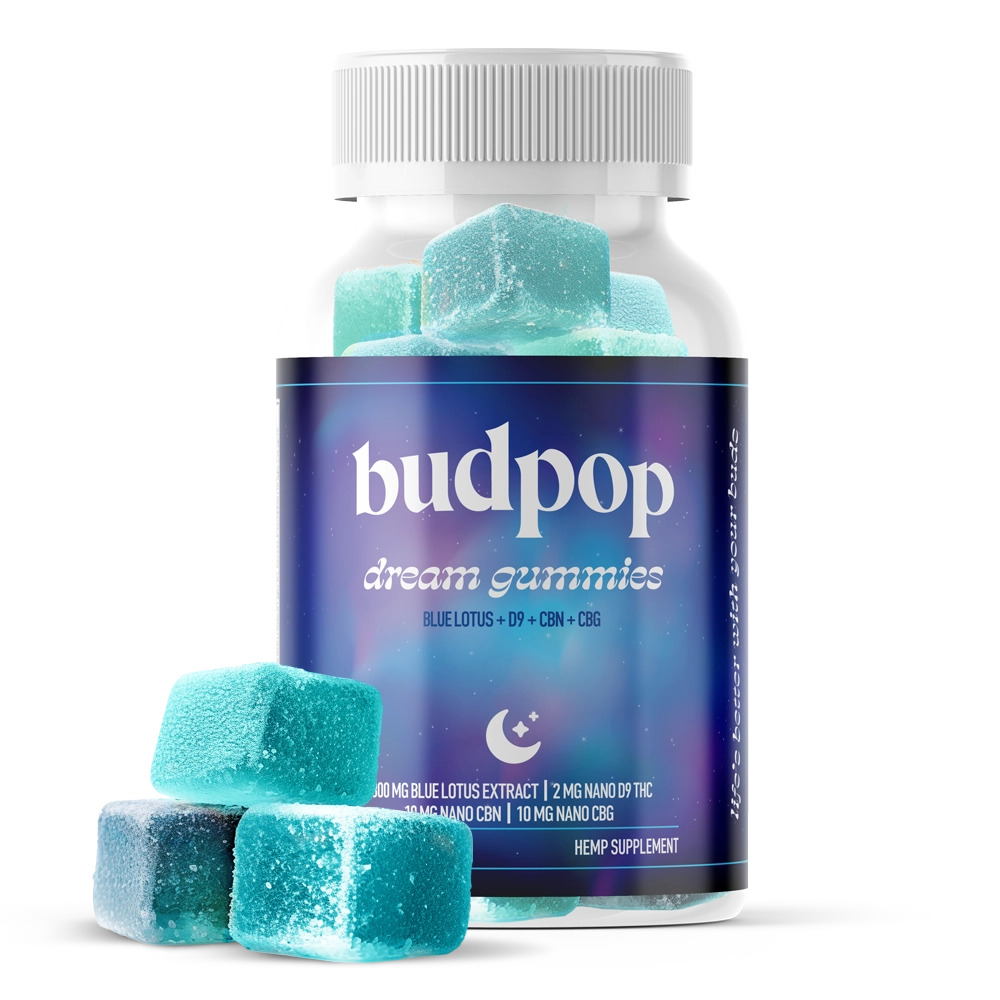
BudPop Blue Lotus Dream Gummies
A nano-formulated take on the same blue lotus dream blend, built for faster onset.
Pros
- Nano formulation for a faster, more consistent onset
- Same well-rounded blue lotus dream blend as the category leader
- Often lists at a friendlier price
- Posted third-party lab results
Cons
- Contains 2 mg THC — not blue-lotus-only, and a no-go if you're tested
- Listed price has varied — confirm before you buy
Bottom line: Essentially the same blue lotus dream formula — 300 mg blue lotus plus 2 mg D9, 10 mg CBN, and 10 mg CBG — but nano-formulated for a faster, more reliable come-up. If you found a standard blue lotus gummy slow or hit-or-miss, the nano version is the tweak worth trying, and it often lists at a friendlier price.
Key details: Third-party lab results posted; check the current batch before you buy.
BudPop runs the same blue lotus dream playbook as our top pick, with one twist worth knowing about: it's nano-formulated. BudPop is a well-known hemp brand, and its Blue Lotus Dream Gummies carry the familiar blend — 300 mg of blue lotus extract per gummy, plus 2 mg of D9 THC, 10 mg of CBN, and 10 mg of CBG, 30 to a jar.
The honesty here is the same as everywhere on this page: blue lotus is mild and varies person to person, and these still carry 2 mg of THC each, so they're an evening product. Start with half, wait it out, no alcohol, no driving, 21+. We've seen this one list at a friendlier price than the category average, which makes it a reasonable pick if cost is part of your decision — just confirm the current listing and the posted lab batch before you order.
- Blue lotus per gummy
- 300 mg blue lotus extract
- Also in the blend
- 2 mg D9 THC + 10 mg CBN + 10 mg CBG
- Format
- Nano-formulated (faster onset)
- Count
- 30 gummies per jar
- COA
- Third-party lab results posted
Who should buy it: Buy this if you've tried a standard blue lotus gummy and found it slow or inconsistent, or if you simply want a faster come-up from the same dream blend — often at a friendlier price. It's the value-and-speed pick rather than a different experience.
What we don't like: Like our top pick, it contains 2 mg of THC plus CBN and CBG, so it isn't a blue-lotus-only experience and isn't for anyone who's drug-tested. Pricing has appeared at more than one number depending on the listing, so confirm what you're actually paying — and the current lab batch — before checkout.
03 · Brand you may already know

Cheef Botanicals Blue Lotus Gummies
An organic-leaning blue lotus gummy from a long-running hemp brand, for shoppers who already trust the name.
Pros
- Established, widely-trusted hemp brand
- Organic, non-GMO sourcing story
- Same blue lotus dream-blend approach as the leaders
Cons
- Public pricing/specs hardest to confirm — verify on the product page
- Contains THC in the blend — not blue-lotus-only, and a no-go if you're tested
Bottom line: A solid third option from a hemp company a lot of people already know and trust. Cheef's blue lotus gummies pair 300 mg of blue lotus extract with the same kind of light nighttime cannabinoid blend, leaning on the brand's organic, non-GMO sourcing story. If you're already a Cheef shopper, this is the easy add to your cart.
Key details: Third-party lab tested; confirm the posted batch on the product page.
If you already buy from Cheef, this is your blue lotus. Cheef Botanicals has been around the hemp space for years with an organic, non-GMO sourcing story, and its Blue Lotus Gummies bring that same approach to the flower — 300 mg of blue lotus extract per piece, paired with a light D9 / CBN / CBG nighttime blend in the now-familiar dream format.
Same honesty, same rules: blue lotus is mild and varies person to person, these carry a small amount of THC, and so they're an evening product — start low, give it time, skip the alcohol, don't drive, 21+. Because listed pricing and pack details can change, confirm the current price and the posted lab batch on the product page before you order. If you have no existing brand loyalty, our top two picks are the more clearly-specced starting points.
- Blue lotus per gummy
- 300 mg blue lotus extract
- Also in the blend
- D9 / CBN / CBG nighttime blend
- Sourcing
- Organic, non-GMO (per brand)
- COA
- Third-party lab tested
Who should buy it: Buy this if you already shop with Cheef and trust the brand's organic sourcing and lab transparency — it's the path-of-least-resistance blue lotus for an existing customer. If you're brand-agnostic, the more fully-specced picks above are the cleaner place to start.
What we don't like: Public pricing and exact pack specs were the hardest to pin down of the three, so confirm the current listing and lab batch yourself before checkout. And like the others, it carries a small amount of THC in the blend — not a blue-lotus-only experience, and not for anyone who's tested.
How to try blue lotus tea the first time
- 1
Start with the flower, not a concentrate
For your first time, loose dried blue lotus flower as tea is the gentlest, most forgiving form — and it's THC-free, so you're feeling the plant by itself. Use roughly a few grams of dried flower per cup; you can always steep stronger next time.
- 2
Steep it long and low
Pour hot (not aggressively boiling) water over the flowers and let them steep a good 10 to 15 minutes — longer than a normal tea. Blue lotus gives up its character slowly. A little honey takes the edge off the earthy, slightly bitter taste.
- 3
Drink it in the evening, with nowhere to be
Treat it as a nighttime, wind-down ritual — at home, no car keys, nothing left on the schedule. Most people find it relaxing and mildly drowsy, so don't plan to do anything that needs sharp focus afterward. And do not pair it with alcohol or other sedatives.
- 4
Give it time and keep expectations mild
Blue lotus is subtle — a soft, wine-like mellow, not a dramatic event, and it varies person to person. Sip slowly, give it a half hour or more, and let it be gentle. If you want vivid dreams, this is the form people most associate with them. Adults 21 and over only; if you take medications or have health conditions, talk to your doctor first.
How we chose
We lead with the lab report, because blue lotus is a young, lightly-regulated category and that's exactly where sloppy products hide. We only point to products from brands that post a current, third-party Certificate of Analysis — the document that confirms what's actually in the product and that it cleared contaminant testing. No posted lab work, no recommendation.
We prefer brands with a real track record over names we just found. The products below come from established hemp companies that have been transparent across many products — in a category this new, who made it matters nearly as much as what's in it.
And we stay honest about the experience. Blue lotus effects are mild and they vary person to person, so we won't promise you a specific feeling — we describe what people commonly report, in plain experiential terms, and we repeat the safety basics until you're tired of them: start low, evening only, no alcohol, no driving, 21+. Nothing here is medical or legal advice.
Key terms
- Blue lotus (Nymphaea caerulea)
- The blue water lily of ancient Egypt — technically a water lily, not a true lotus, despite the name. It was sacred to the Egyptians, who used it to relax, set a mood, and dream. Today it's sold as tea, extract, gummies, and smokable flower. Federally legal in the US (Louisiana excepted).
- Nuciferine
- Blue lotus's headline compound — the dreamy one. In plain speak, it's associated with the calm, mellow, relaxed feeling people describe, which is why blue lotus reads as a wind-down rather than a stimulant or a psychedelic. It is not THC.
- Aporphine
- The other key blue lotus compound, working alongside nuciferine. Together they're 'the dreamy, calming ones' — the reason the experience lands as a soft, wine-like mellow and easier sleep instead of a high or a trip.
- "Not approved for human consumption" (decoded)
- A labeling quirk you'll see on many blue lotus products. It doesn't mean the product is banned or dangerous — it means the FDA hasn't formally evaluated or approved blue lotus as a food or supplement, so sellers use that phrase for legal cover. The flower itself is federally unscheduled. It's a regulatory gray zone, not a warning that it's illegal.
- Lucid dreaming
- In plain speak: dreaming while being aware you're dreaming, sometimes with enough control to steer it. Blue lotus is one of the botanicals people most associate with unusually vivid or lucid dreams — it's a commonly reported (not guaranteed) part of the experience, especially with tea before bed.
Questions, answered
Is blue lotus legal?
Federally, yes — blue lotus (Nymphaea caerulea) is not a controlled substance in the United States, so it's sold openly as tea, extract, gummies, and flower. The one clear exception is Louisiana, which has restricted it. You'll also often see it labeled 'not for human consumption,' which is a regulatory cover phrase (the FDA hasn't formally evaluated it as a food or supplement), not a sign it's banned. Rules in young categories can shift, so do a quick check on your own state — and note that gummies blended with THC follow hemp rules too. This isn't legal advice, just the lay of the land.
What does blue lotus feel like?
Most people describe a soft, wine-like mellow — relaxed shoulders, a warm heaviness, an easier slide toward sleep, and sometimes unusually vivid or lucid dreams that night. It's subtle and it varies person to person, so think 'gentle nightcap,' not 'dramatic event.' The single most important thing to know is what it's NOT: there are no visuals, no hallucinations, and no psychedelic trip. If you're picturing mushrooms, recalibrate to picturing a glass of wine.
Is blue lotus a drug?
Not in the controlled-substance sense — it's an unscheduled botanical, legal federally (Louisiana excepted), the way kava or chamomile are botanicals rather than scheduled drugs. It does contain mildly active compounds (nuciferine and aporphine) that produce a gentle relaxing effect, so it's not inert, but it's not a narcotic or a psychedelic and it doesn't get you 'high' in the THC sense. Just note that many blue lotus gummies add a small amount of THC to the blend, which is a separate ingredient with its own rules — read the label.
Does blue lotus show up on a drug test?
Blue lotus itself — its compounds nuciferine and aporphine — isn't something standard drug-test panels screen for, so the plain flower (in tea or a flower-only extract) shouldn't trigger a typical test. The big catch: many blue lotus GUMMIES, including the popular 'dream' blends, add a small amount of THC, and THC absolutely is screened for. So if you're tested at work, the form matters enormously — stick to plain flower/tea, read every label and COA, and when in doubt, don't. We can't make guarantees about any specific test.
How is blue lotus different from lavender or chamomile?
They're all gentle, relaxing botanicals you'd reach for in the evening, and none is a psychedelic. The difference is in flavor: lavender and chamomile are pure 'calm tea' — soothing, familiar, no dreaminess to speak of. Blue lotus brings the same mellow wind-down but adds the thing it's famous for: a slightly euphoric, wine-like quality and a reputation for vivid or lucid dreams. Think of chamomile as plain relaxation and blue lotus as relaxation with a dreamy, faintly mood-lifting edge.
Can you smoke blue lotus?
Yes — dried blue lotus flower can be smoked or vaped, and it's the fastest-acting, shortest-lasting form, with a quick mild mellow that fades soon after. It's also THC-free in flower form. That said, it's the form we'd steer most people away from: inhaling any combusted plant material is hard on your lungs and the effect is brief. For most people, tea or a lab-tested edible is a gentler, longer, lung-friendlier way to experience the same flower.
Is blue lotus the same as blue lily?
Essentially, yes — 'blue lotus' and 'blue lily' are common names for the same plant, Nymphaea caerulea, the Egyptian blue water lily. (Strictly, it's a water lily rather than a true lotus, which is why you'll see 'blue lily' too.) You may also run into 'sacred blue lily of the Nile' or 'blue Egyptian lotus' — all the same flower. Just don't confuse it with unrelated decorative plants that share the word 'lily' in their name; for the relaxing botanical people are searching for, blue lotus and blue lily point to the same thing.
Filed under Buyer's Guide
Part of Beyond THC
Keep reading
Best Amanita Muscaria Gummies
The legal storybook mushroom — another dreamy, not-a-trip botanical, explained in plain speak.
Best Kava Drinks
Another ancient, legal, mellow path to the end of the day — no THC involved.
Legal Alternatives to THC
The whole no-THC aisle, from kava to kanna to blue lotus, mapped out.