Our Pick: Kalm with Kava
Check price →Kava Tea, Explained: How to Make It + The Best to Buy (2026)
Here's the secret nobody tells you in the tea aisle: real kava "tea" isn't really a tea at all. It's ground kava root kneaded into warm water through a strainer bag, the way Pacific islanders have made it for centuries — and that preparation is the difference between a pleasant herbal sip and the genuine shoulders-down kava calm. This guide covers both honestly: how to make the real thing at home, why the grocery-store tea bags are far gentler than they sound, and the kava we'd actually buy.
By The Kind Buds Desk · ~8 min read · Updated 2026-06-12
Which one should you buy?
Don't guess. Answer 3 quick questions and we'll match you to your perfect pick in 20 seconds — from this guide's own tested lineup.
Get my pick★ Our Top Pick
Best Traditional Kava

Kalm with Kava Loa Waka Traditional Grind
Lab-tested, 100% noble Fiji kava — the strongest, most trustworthy way to make real kava at home.
Not sure yet? Compare all 4 picks below ↓
Let's clear up the friendliest misconception in the relaxation aisle. When people search for "kava tea," they're usually picturing a tea bag and a kettle — and there is a version of that (Yogi makes the famous one). But traditional kava, the drink Pacific islanders have shared for centuries, isn't brewed like tea at all. It's the ground root of the kava plant — what sellers call traditional grind or medium grind — kneaded by hand into warm water through a cloth strainer bag, then strained and sipped. No steeping, no boiling, no bag-on-a-string. The kneading is the whole trick: the relaxing compounds in kava, called kavalactones, don't just leach out into hot water the way caffeine does. You have to work them out of the root, and that ten minutes of squeezing is the difference between a real kava session and flavored water.
That's also the honest news about tea-bag kava, and we'll say it kindly because we like Yogi's tea: a kava tea bag steeped in hot water delivers a small fraction of what a traditionally prepared shell delivers. There's only a little root in the bag, and steeping without kneading extracts only a little of that. It's a perfectly pleasant, calming cup of herbal tea with a whisper of kava in it — a lovely gateway, a terrible benchmark. If you tried a kava tea bag once and concluded kava does nothing, you haven't actually met kava yet. This guide exists so you know exactly which experience you're buying before you spend a dime.
Below: the real traditional-grind kava we'd start with (and the strainer bag you'll need — it costs a few dollars and matters more than the brand), the famous grocery-store tea bag with honest expectations attached, and a skip-the-prep canned option for nights when kneading a cloth bag for ten minutes is not happening. Same ground rules as everything we write about kava: a tingly tongue is normal, your first session may feel mild because kava famously works better the second or third time (reverse tolerance), keep it occasional rather than a daily heavy habit, and none of this is medical advice — if you take medications, have a quick word with your doctor first.
The short version
- Real "kava tea" isn't a tea — it's traditional-grind kava root kneaded into warm (never boiling) water through a strainer bag, then strained and sipped.
- Tea-bag kava like Yogi's is far gentler than traditionally prepared kava — a pleasant herbal cup with a whisper of kava, not the full island experience.
- Our pick for the real thing is Kalm with Kava's Loa Waka traditional grind: lab-tested, 100% noble Fiji kava that's one of the strongest on the market.
- A $5–10 cloth strainer bag is the one tool you actually need — kavalactones have to be kneaded out of the root, not steeped out.
- First-timer rules carry over from every kava format: the tongue-tingle is normal, the first session may feel mild (reverse tolerance), keep it occasional, and check with your doctor if you take medications.
| Product | Form | Strength | Effort | Price |
|---|---|---|---|---|
| Kalm with Kava Loa Waka | Traditional grind powder | The real thing — strong | ~10 min knead + strain | ~$39.99 / 8 oz |
| Wakacon Fijian Waka | Traditional grind powder | The real thing — strong | ~10 min knead + strain | ~$45 / 1 lb |
| Yogi Kava Stress Relief | Tea bags (16) | Gentle — a whisper of kava | Steep 7–10 min | ~$5–6 / box |
| Leilo Kava Tonic | Ready-to-drink can | Real serving, zero prep | Open fridge | $49.99 / 12-pk |
At a glance — kava tea and powder picks, by form and effort
The to Buy quiz
Which one should you actually buy?
Skip the scrolling and the second-guessing — answer a few quick questions and we'll match you to your perfect pick, based on how you'll actually use it.
to Buy quiz
Question 1 of 1
What matters most to you?
💡 Good to know
Real "kava tea" isn't a tea — it's traditional-grind kava root kneaded into warm (never boiling) water through a strainer bag, then strained and sipped.
01 · Best Traditional Kava
Our PickKalm with Kava Loa Waka Traditional Grind
Lab-tested, 100% noble Fiji kava — the strongest, most trustworthy way to make real kava at home.
Pros
- Lab-tested, 100% noble Fiji kava from a long-trusted US brand
- The strongest, most authentic kava experience on this list
- Best per-session price once you own a strainer bag
- No alcohol, no THC, no hangover
Cons
- Ten minutes of hands-on kneading per batch
- Needs a separately purchased strainer bag
- The famous earthy taste, undiluted
Bottom line: If you want to taste what kava actually is — not the tea-bag whisper, the real island calm — this is the bag we'd start you with. Loa Waka is Kalm with Kava's strongest Fiji variety, it's lab-tested 100% noble root, and an 8 oz bag makes roughly eight to ten proper sessions. Pair it with a $5 strainer bag and you've got a kava bar in your kitchen.
Key details: Lab-tested, 100% noble kava root; single-origin Fiji (Loa Waka cultivar).
This is the difference between reading about kava and actually meeting it. The Loa Waka traditional grind from Kalm with Kava is ground kava root from Fiji, prepared the way it's been prepared for centuries: kneaded into warm water through a strainer bag for about ten minutes, strained, chilled, and sipped. Loa Waka is the strongest Fiji kava the brand carries — and one of the stronger noble kavas you can buy anywhere — so a properly made batch delivers the genuine article: the brief tongue-tingle, then the warm, social, shoulders-down ease that canned kava approximates and tea bags only gesture at.
Be honest with yourself about the effort and the taste, because we will be. Preparation takes ten minutes of actively kneading a cloth bag in a bowl of warm water — pleasantly ritualistic once you're into it, mildly absurd the first time. And traditional kava tastes like the earth it grew in: peppery, rooty, the flavor island regulars describe with affection as "dirt water." Serve it cold, drink it reasonably quickly rather than nursing it, and keep a pineapple-juice chaser nearby — that's the kava-bar method, and it works. The reward for the effort is the real thing, at a per-session price the cans can't touch.
- Form
- Traditional (medium) grind kava root powder
- Variety
- Loa Waka — 100% noble kava, single-origin Fiji
- Size
- 8 oz bag (4 oz and 1 lb also sold); ~8–10 sessions per 8 oz
- Preparation
- Knead in warm water through a strainer bag, ~10 minutes
- What's tested
- Lab-tested for noble variety and quality
Who should buy it: Buy this if you're done auditioning kava through tea bags and want the genuine experience at home — or if you tried a can, liked where it pointed, and want the full-strength original. It's also the value play for anyone who'd otherwise be a kava-bar regular: an 8 oz bag costs about two rounds at the bar and makes eight to ten sessions.
What we don't like: It's the most effort on this list by a mile — ten minutes of kneading per batch, plus a strainer bag you have to buy separately (a few dollars, but still a second purchase). And the earthy taste is real; if a flavor you have to make peace with is a dealbreaker, start with a can instead.
02 · Best Value by the Pound
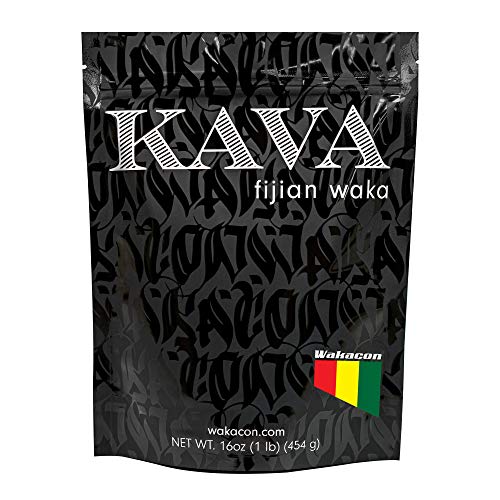
Wakacon Fijian Waka Kava Powder
A full pound of noble Fijian waka-grade root — the stock-the-pantry pick for regulars.
Pros
- Lowest cost per session of anything in this guide
- Waka-grade lateral roots — the traditionally prized part of the plant
- Long, steady track record with the US kava community
- No alcohol, no THC, no hangover
Cons
- A full pound is a big first commitment
- Less published testing detail than our top pick
- Same effort and earthy taste as any traditional grind
Bottom line: Wakacon is the workhorse: a full pound of noble Fijian kava made from waka-grade lateral roots, from a brand that's been selling to US kava drinkers since the early 2010s. It's the bag you buy once the ritual has stuck and you're making kava a few evenings a week. Same preparation, same earthy honesty — about twice the kava per dollar.
Key details: Noble Fijian kava made from waka (lateral) roots; sold in the US for over a decade.
Once kava nights become a habit, the math starts to matter — and this is where the math points. The Wakacon Fijian Waka powder is a full pound of traditional-grind noble kava, which works out to roughly fifteen to twenty proper sessions per bag. "Waka" is the Fijian grading term for the plant's lateral roots — the part of the root system traditionally considered the most potent — so the name on the bag is actually a quality claim, and Wakacon has been selling exactly this to American kava drinkers for over a decade, long before kava was a trend.
The trade-offs are the honest ones. Wakacon is a smaller, quieter operation than Kalm with Kava — you're buying on its long track record and Fijian sourcing rather than a slick lab-results page, which is why it's our value pick rather than our first pick. And a pound is a commitment: buy this after you know you like kava, not to find out. Preparation and taste are identical to any traditional grind — warm water, ten minutes of kneading, strain well, serve cold, keep the juice chaser handy.
- Form
- Traditional grind kava root powder
- Variety
- Noble Fijian kava, waka (lateral root) grade
- Size
- 16 oz (1 lb) bag; ~15–20 sessions
- Preparation
- Knead in warm water through a strainer bag, ~10 minutes
- Track record
- Sold to US kava drinkers since the early 2010s
Who should buy it: Buy Wakacon if the traditional ritual has already won you over and you want your cost per session as low as it goes. It's the restock bag for the converted — the kava equivalent of switching from buying coffee by the cup to buying beans by the pound.
What we don't like: A pound is a lot of kava to commit to on a first try — start smaller. The brand's testing transparency is thinner than Kalm with Kava's, and like every traditional grind, it demands the knead, the strainer bag, and a tolerance for that proudly earthy taste.
03 · Easiest Cup (Gentle by Design)

Yogi Kava Stress Relief Tea
The famous grocery-store kava — a genuinely cozy herbal cup, honestly a whisper of real kava.
Pros
- Cheapest, easiest entry point to kava anywhere — it's at your grocery store
- Genuinely pleasant spicy-sweet flavor; a cozy caffeine-free ritual
- Organic blend from a brand that's carried it for decades
- Zero prep beyond boiling water
Cons
- A whisper of kava, not a real session — easy to draw the wrong conclusion from
- Blend flavors (cinnamon, carob) mostly cover the kava itself
- No disclosed kavalactone content
Bottom line: Let's be kind and clear at the same time: Yogi's Kava Stress Relief is a lovely, spicy-sweet bedtime tea and the single easiest way to put the word "kava" in your evening — and it is nowhere near a traditional kava session, by design. A steeped tea bag extracts only a whisper of kavalactones. As a cozy ritual, four stars. As your verdict on what kava can do, please don't.
Key details: Organic, caffeine-free blend of kava root with cinnamon, sarsaparilla, and carob; widely sold in US groceries.
This is almost certainly the first kava most Americans ever taste, and it deserves both the credit and the asterisk. Yogi's Kava Stress Relief blends kava root with cinnamon, Indian sarsaparilla, and carob into a caffeine-free cup that's genuinely pleasant — warm, spicy-sweet, the kind of thing you make at nine p.m. with no agenda. It's organic, it's a few dollars at nearly any grocery store, and Yogi has kept it on shelves for decades. As an easy, cozy wind-down ritual, it earns its cult following.
Used for what it is, it's great. Tip from the tea-forum faithful: use two bags, steep a full ten minutes covered, and squeeze the bags well at the end — you'll coax out a bit more of the root (you may even catch a faint tongue-tingle, kava's calling card). And if the flavor and the idea both appeal, consider this tea your on-ramp: the traditional grinds above are what the same plant feels like at full volume.
- Form
- Herbal tea bags (16 per box)
- Blend
- Kava root with cinnamon, Indian sarsaparilla root, and carob pod
- Caffeine
- Caffeine-free
- Strength
- Gentle — a small fraction of a traditional kava session
- Where to buy
- Most US grocery stores, plus the usual online retailers
Who should buy it: Buy Yogi if you want a caffeine-free, genuinely tasty evening tea with a gentle introduction to kava's flavor — or if you're kava-curious but not ready to commit to powders and strainer bags. It's the right first chapter; just know it isn't the whole book.
What we don't like: Calling it "kava tea" sets expectations the format can't meet — the kava experience here is a whisper, and first-timers who judge kava by this cup walk away with the wrong conclusion. It's also a blend, so what you taste is mostly cinnamon and carob, not kava itself.
04 · Skip the Prep (Ready to Drink)

Leilo Kava Tonic
A real, disclosed kava serving in a can that tastes good — no kneading, no strainer, no dirt water.
Pros
- Real, disclosed kavalactone serving with zero preparation
- Genuinely good flavors — no earthy taste to make peace with
- Meaningfully stronger than any kava tea bag
- No alcohol, no THC, no hangover
Cons
- Priciest per session on this list
- Can't match a strong traditional batch at full volume
Bottom line: For the nights when a ten-minute kneading ritual is not happening, Leilo is the answer: a 1,000 mg kava root blend — about 125 mg of kavalactones — in a ready-to-drink tonic that genuinely tastes good. It's meaningfully stronger than any tea bag, far easier than any powder, and it's the same can we crowned Best Overall in our kava drinks guide.
Key details: Lab-tested; kavalactone content disclosed (~125 mg per can).
Here's the middle path between the tea bag's whisper and the strainer bag's workout. The Leilo Kava Tonic packs a 1,000 mg kava root blend — roughly 125 mg of kavalactones, disclosed right up front — into a can you just open. That's a genuinely meaningful serving, in the same conversation as a moderate traditional session, with none of the kneading and none of the earthy taste: Leilo built its whole brand on flavors you'd drink for fun.
All the usual kava rules travel with it: expect the brief tongue-tingle (that's the kavalactones saying hello), give it a few sessions before you judge it thanks to reverse tolerance, and sip it like an evening drink rather than pounding it. For the full canned-kava picture — including the strongest-per-can alternative — see our kava drinks roundup.
- Kava per can
- 1,000 mg kava root blend (~125 mg kavalactones)
- Form
- Ready-to-drink canned kava tonic
- Contains
- No alcohol, no THC, no hemp-derived anything
- What's tested
- Lab-tested; kavalactone content disclosed
Who should buy it: Buy Leilo if you want a real kava serving without becoming a hobbyist — or as the weeknight companion to a weekend traditional-grind ritual. It's also the easiest format to hand a curious friend: cold, tasty, and self-explanatory.
What we don't like: At just over $4 a can it's the priciest way to drink kava regularly, and the per-session strength ceiling is lower than a well-made traditional batch. It's convenience you're paying for — fair, but worth naming.
Traditional kava prep, step by step
- 1
Measure the root into a kava strainer bag
Scoop 2–4 tablespoons of traditional-grind kava root into a kava strainer bag — a fine-weave cloth bag (muslin or nylon, a few dollars online) that keeps the gritty root out of your drink while letting the good stuff through. This one cheap tool is non-negotiable; a metal tea strainer is too coarse and a coffee filter too slow.
- 2
Use warm water — never boiling
Fill a wide bowl with 2–4 cups of warm water, around bathwater temperature. Boiling water is the classic beginner mistake — kava isn't tea, and high heat can degrade the kavalactones you're trying to extract. Warm helps the process; hot hurts it.
- 3
Knead the bag in the water for about 10 minutes
Submerge the bag and knead and squeeze it steadily, like wringing a washcloth, for 8–10 minutes. This is the step that makes it kava: kavalactones don't steep out the way caffeine does — the mechanical squeezing works them out of the root and into the water, which will turn an opaque, muddy brown. That color is success.
- 4
Wring it out and strain well
Give the bag a final hard wringing to capture the last and strongest of the extraction, then set the spent root aside. Your kava should be smooth and silty, with no grit — if you feel particles, strain it once more through the bag.
- 5
Chill, serve, and pace yourself
Serve it cold — over ice or after an hour in the fridge — in half-cup servings drunk briskly, with a pineapple-juice chaser nearby. Expect the tongue-tingle within minutes and the calm within fifteen to thirty. If your first session feels mild, that's kava's famous reverse tolerance, not a failed batch: give it two or three evenings before you judge. Keep it occasional, skip the driver's seat afterward, and if you take medications, talk to your doctor before making kava a habit.
How we chose
Honesty about strength comes first, because "kava tea" covers everything from a full traditional session to a gentle herbal cup. We tell you plainly which products deliver a genuine kavalactone serving and which deliver a pleasant whisper, so nobody buys a tea bag expecting an island ceremony — or grinds through a kneading session when all they wanted was a cozy cup.
For traditional-grind kava, sourcing is the whole game. We look for 100% noble kava varieties (the time-tested cultivars Pacific islanders grow for everyday drinking), a named origin like Fiji or Vanuatu, and lab testing the brand actually talks about. "Mystery kava" at a suspicious price didn't make the list.
Then we judge the experience like humans: how it tastes (traditional kava is famously earthy — we tell you how to make peace with it), how much effort the preparation honestly takes, and whether the price per session makes sense. Everything is described in plain, experiential terms — kava isn't a treatment for anything, and nothing in this guide is medical advice.
Key terms
- Traditional grind
- Kava root ground to a coarse, sand-like powder — also sold as "medium grind." It's the classic form for making kava the island way: kneaded in warm water through a strainer bag, then strained out. The most kava per dollar, and the most effort.
- Micronized kava
- Kava root milled so fine it can be stirred straight into water with no strainer bag and no kneading — the instant-coffee version of traditional grind. Easier, slightly pricier per session, and a little siltier in texture since the root stays in the drink.
- Kava strainer
- The fine-weave cloth bag (muslin or nylon) used to knead and strain traditional-grind kava. It holds the gritty root while the kavalactone-rich liquid works through. A few dollars online, and the one tool a home kava setup genuinely requires.
- Kavalactones
- The active compounds in kava root — the part that does the relaxing. Read a kavalactone number the way you'd read caffeine on a cold brew. Crucially for this guide, they don't steep out in hot water like caffeine; they have to be kneaded out, which is why preparation method decides everything.
- Reverse tolerance
- Kava's famous quirk: instead of needing more over time, many people feel little their first session, with the calm arriving properly on the second or third try. Well known enough that kava bars warn newcomers. The rule: don't double up on night one, and don't judge kava by it either.
Questions, answered
Does kava tea actually work?
It depends entirely on which "kava tea" you mean — that's the honest heart of this guide. Traditionally prepared kava (traditional-grind root kneaded in warm water through a strainer bag) delivers the real experience: many people describe a warm, social, shoulders-down calm arriving within fifteen to thirty minutes, usually announced by a brief tongue-tingle. A grocery-store kava tea bag steeped in hot water delivers a small fraction of that, because there's only a little root in the bag and kavalactones don't steep out the way caffeine does. So: real preparation, real experience; tea bag, pleasant herbal cup with a whisper of kava. One more variable — kava's reverse tolerance means even a well-made first batch can feel mild, so give it two or three sessions.
What's the difference between Yogi kava tea and real kava?
Yogi's Kava Stress Relief is a blended herbal tea — kava root alongside cinnamon, sarsaparilla, and carob — in a standard steeping bag. It's cozy, tasty, and genuinely the easiest kava introduction in America, but the format caps it: a modest amount of root, hot-water steeping instead of kneading, and no disclosed kavalactone content add up to a gentle whisper of kava rather than a session. "Real" kava means traditional-grind root (like our Kalm with Kava and Wakacon picks) kneaded through a strainer bag, or a lab-tested canned kava with a disclosed kavalactone number. Loving the Yogi cup and never feeling much from it are both completely normal — and both are telling you the same thing: you haven't met full-strength kava yet.
How much kava tea should I drink?
For traditional preparation, the standard starting recipe is 2–4 tablespoons of root kneaded into 2–4 cups of warm water, drunk as a session over an evening — start at the low end your first few times. Kava is traditionally taken in half-cup servings spaced out over conversation, not chugged. Resist the urge to double up if the first session feels mild; that's reverse tolerance, and the calm usually arrives properly on try two or three. The bigger principle: keep kava occasional — a few evenings a week, not a heavy daily habit — and if you take medications, are pregnant, or are managing a condition, check with your doctor before it joins the rotation. That's general caution, not medical advice.
How long does kava stay in your system?
The noticeable part — the calm — typically runs two to three hours after a session, tapering gently rather than ending with a crash, and most people feel completely themselves by morning with no hangover. The kavalactones themselves clear over roughly a day or so for typical occasional use. Two practical notes: kava contains zero THC and is a different plant from cannabis entirely, so it isn't what standard drug-test panels look for; and "out of your system" isn't the same as "fine to drive at minute one" — treat a kava session like you'd treat a couple of drinks and stay parked for the evening. As always, that's plain-speak experience talk, not medical guidance.
Is kava tea addictive?
Kava isn't known for the compulsive, crave-it pull associated with alcohol or nicotine, and its famous reverse tolerance runs opposite to the more-more-more pattern — most regulars settle into a steady occasional rhythm rather than escalating. That said, any nightly ritual can become a crutch, so we'd give kava the same honest framing we give everything: keep it an occasional pleasure rather than a daily requirement, and if a calm drink starts feeling mandatory instead of enjoyable, that's the cue to ease off for a while. Heavy daily use over long stretches is exactly the pattern islander tradition and common sense both advise against. If you have a history that makes this question personal, a quick word with your doctor beats our opinion.
What does kava tea taste like?
Traditional kava tastes earthy, peppery, and a little bitter — the flavor regulars affectionately call "dirt water" — with a texture closer to thin chai than to tea. Nobody pretends otherwise, and the fixes are well-worn: serve it cold, drink in brisk half-cup servings rather than slow sips, keep a pineapple-juice chaser nearby, or knead it into coconut water to round the edges. Tea-bag versions like Yogi taste mostly of their blend — cinnamon and carob, pleasantly spicy-sweet — with kava as a background note. And canned kavas like Leilo are flavored to taste like drinks you'd choose anyway. One taste-adjacent thing every real kava shares: a brief tingly numbness on your tongue, which is normal, harmless, and the sign you got the genuine article.
Keep reading
Best Kava Drinks
The ready-to-drink side of the kava lane — the two cans we'd hand a first-timer.
Kava vs. Kratom
Two plants that get mentioned in the same breath and shouldn't be — the honest comparison.
Legal Alternatives to THC
The full map of legal ways to unwind — kava, kanna, and the rest of the lane.