Our Pick: Sentia Spirits
Check price →GABA Spirits, Explained: Drinks Designed by Neuroscientists (2026)
A GABA spirit is a non-alcoholic spirit built around botanicals associated with GABA — the brain's own calm-down system. The flagship brand was designed by one of the world's most famous neuroscientists, the man who ranked alcohol the most harmful drug on Earth and then spent a decade building its replacement. Here's the whole category in plain speak: what these drinks are, what drinkers describe, what they're not, and how to actually pour one.
By The Kind Buds Desk · ~8 min read · Updated 2026-06-12
Which one should you buy?
Don't guess. Answer 3 quick questions and we'll match you to your perfect pick in 20 seconds — from this guide's own tested lineup.
Get my pick★ Our Top Pick
The Original GABA Spirit
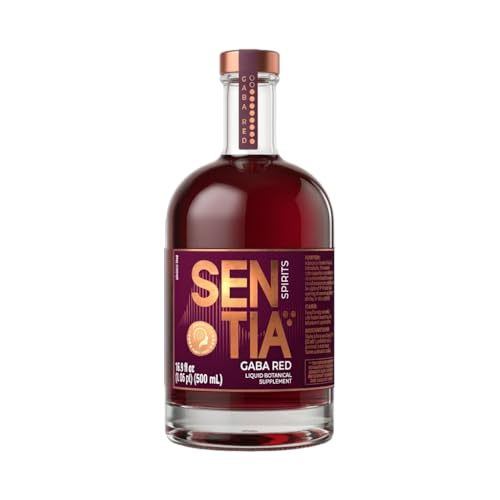
Sentia GABA Red
The neuroscientist-designed flagship: a bittersweet botanical spirit built for the wind-down hour.
Not sure yet? Compare all 3 picks below ↓
Here's a sentence you're going to hear a lot more over the next year: "it's a GABA spirit." The short version: a GABA spirit is a non-alcoholic spirit — bottled and poured like a gin or an amaro, mixed with tonic or ginger beer — built around botanical blends associated with GABA, the brain's main calm-down chemical. Think of GABA as your brain's dimmer switch: when it's active, the lights come down a little, the edges soften, and you feel more comfortable in the room. Alcohol's famous first act — that warm, sociable first-drink ease — happens largely at that same dimmer switch, which is exactly why these new drinks aim there. No alcohol, no THC, no high. Just botanicals, a nice bottle, and a very specific design goal.
The reason this category has a story worth telling is the man behind its flagship. David Nutt is one of the world's best-known neuroscientists — a professor of neuropsychopharmacology who spent his career studying how alcohol works on the brain, advised the UK government on drugs, and famously published research ranking alcohol the most harmful drug of all when you count the damage to both the drinker and everyone around them. (It cost him the government job.) Then he did something almost nobody does: instead of just criticizing alcohol, he spent the better part of a decade trying to build its replacement. His venture, GABA Labs, designed Sentia — a line of botanical "GABA spirits" engineered, in the brand's words, to bottle the feelings associated with connection. Sentia built a following in the UK, and it now ships direct-to-consumer in the US. The category's moment has arrived stateside.
One promise before we pour: we'll keep this honest. GABA spirits are designed by their makers to work with the GABA system, and drinkers describe a gentle, social looseness — but the research on botanical GABA drinks is young, nobody should call them medicine, and we won't. What we can do is explain the idea clearly, tell you what's actually in the bottles, pass along the taste-and-feel consensus, and show you where this fits in the bigger alcohol-alternative picture — including why GABA spirits and kava are the two shelves that don't care at all what happens to hemp THC drinks on November 12. None of this is medical advice; it's a plain-speak primer from people who did the reading and the sipping.
The short version
- A GABA spirit is a non-alcoholic spirit built around botanicals associated with GABA — the brain's main calm-down chemical, the "dimmer switch" that alcohol's first warm act also targets.
- The flagship, Sentia, was designed by GABA Labs — the venture of David Nutt, the world-famous neuroscientist who ranked alcohol the most harmful drug and then spent a decade building its replacement. It's now US direct-to-consumer at $35.95 per 500ml bottle.
- Drinkers describe a warm, social, two-drinks-in looseness without intoxication — that's the design intent and the common report, not a proven medical effect. The research on botanical GABA drinks is still young.
- GABA spirits are 100% ban-proof: nothing in them is a cannabinoid, so the November 12 hemp-THC shake-up doesn't touch them. They and kava are the standing survivors on the alcohol-alternative shelf.
- Ritual is half the product: a nice glass, real ice, a proper mixer, and an actual occasion. Poured like a seltzer at your desk, any GABA spirit will underwhelm you.
| Product | What's in it | Feels like (what drinkers describe) | Price |
|---|---|---|---|
| Sentia GABA Red | Botanical blend incl. ashwagandha, tulsi, passionflower, rhodiola, hawthorn berry — designed for GABAergic effect | A warm, shoulders-down evening ease; bittersweet berry sipper | $35.95 / 500ml (20 servings) |
| Kin Euphorics High Rhode | Adaptogens, nootropics, and botanics; herbal bitters and tart citrus | A lifted, social "gentle rise" built for mocktail hour | $39.00 / 500ml bottle |
| Leilo Kava Tonic | 1,000 mg kava root blend (~125 mg kavalactones) per can | Kava's classic mellow, social calm — with the tongue-tingle | $49.99 / 12-pk |
At a glance — the three bottles (and cans) that map the category
The 20-second quiz
Which one should you actually buy?
Skip the scrolling and the second-guessing — answer a few quick questions and we'll match you to your perfect pick, based on how you'll actually use it.
Quick quiz
Question 1 of 1
What matters most to you?
💡 Good to know
A GABA spirit is a non-alcoholic spirit built around botanicals associated with GABA — the brain's main calm-down chemical, the "dimmer switch" that alcohol's first warm act also targets.
01 · The Original GABA Spirit
Our PickSentia GABA Red
The neuroscientist-designed flagship: a bittersweet botanical spirit built for the wind-down hour.
Pros
- The category-defining original, designed by a world-famous neuroscientist's GABA Labs
- Botanicals disclosed blend-by-blend — no mystery proprietary dust
- Under $2 a serve — quietly the cheapest pour on the alcohol-alternative shelf
- Three distinct blends (relax / social flow / uplift) instead of one flavor
- Zero cannabinoids — completely untouched by hemp-THC rule changes
Cons
- Effect is gentle and ritual-dependent — buzz-chasers will be disappointed
- Adult, bitter-leaning flavors; no potency number on the label to compare
Bottom line: This is the bottle that defines the category — designed by David Nutt's GABA Labs to aim at the brain's dimmer switch, and now shipping direct in the US. GABA Red is the wind-down blend: rich, bittersweet berry notes over ice with tonic, and the gentle, social ease drinkers describe is exactly what the category promises. If you try one GABA spirit, it's this one.
Key details: Discloses its botanicals blend-by-blend (ashwagandha, tulsi, passionflower, rhodiola, hawthorn berry); 0% ABV, caffeine-free. No potency number to compare — Sentia's transparency lives in the ingredient list, not a milligram count.
Every category has a bottle that invented it, and for GABA spirits that bottle is red. Sentia GABA Red is the flagship of the line designed by GABA Labs — the botanical-science venture co-founded by neuroscientist David Nutt — and it wears the design brief on its label. The blend is built from botanicals the brand selects for their association with the GABA system: ashwagandha, tulsi leaf, passionflower, rhodiola, and hawthorn berry, in a dark, bittersweet pour that drinks like an amaro's mellow cousin. The brand's own framing is refreshingly direct: GABA is the brain's most important inhibitory neurotransmitter — the comfortable, present, first-drink feeling — and Sentia selects plant ingredients known in the botanical literature for their GABAergic associations, then blends them to be poured and shared like a spirit.
What does it feel like? Here's the honest version. The design intent is that warm, two-drinks-in looseness — and many drinkers describe something close to it: a soft landing about fifteen to thirty minutes in, shoulders down, conversation a little easier, with a clear head throughout. Others describe it as subtle, especially gulped solo at a desk, which is why the ritual matters (more on that below). Two siblings round out the lineup if Red's wind-down lane isn't yours: GABA Black is the smoky, spiced social-flow blend (star anise, ginseng, schisandra, gotu kola, magnolia bark) built for big nights, and GABA Gold is the bright-citrus uplift blend (hops, schisandra, chamomile, lemon balm) that plays a floral take on a G&T. The three-bottle collection runs $97.06 with free shipping and is the smart way to find your blend.
- Format
- 500ml bottled non-alcoholic spirit — 20 servings (25ml serve, poured with a mixer)
- The lineup
- GABA Red (relax) · GABA Black (social flow) · GABA Gold (uplift), $35.95 each; trio $97.06
- Red's botanicals
- Ashwagandha, tulsi leaf, passionflower, rhodiola, hawthorn berry
- Contains
- 0% ABV, caffeine-free, gluten-free — no alcohol, no THC, no cannabinoids of any kind
- Designed by
- GABA Labs — the botanical venture co-founded by neuroscientist David Nutt
- How to serve
- Over ice with tonic (Red/Gold) or ginger beer/cola (Black)
Who should buy it: Buy Sentia if you're sober-curious and miss the first twenty minutes of a drink more than the drink itself — the warmth, the ease, the signal that the day is over. It's the pick for the ritualist who wants a real bottle on the bar cart, for the Dry January graduate looking for a permanent weeknight pour, and for anyone who finds the David Nutt story as persuasive as we do: the world's loudest alcohol critic spent ten years building this instead of just complaining.
What we don't like: Expectation management is the whole game. If you're waiting for a buzz, Sentia will read as an expensive bitter cordial — the effect drinkers describe is gentle, social, and easy to miss if you chug it alone at your desk. The flavors are genuinely adult (bitter, herbal, complex), which is a feature for amaro people and a surprise for soda people. And as with any new functional category, you're trusting the brand's design story; there's no kavalactone-style number on the label to comparison-shop.
02 · The American Original

Kin Euphorics High Rhode
The US 'functional spirits' pioneer: an adaptogen-and-nootropic mixer built for social hour.
Pros
- The US pioneer — years of category experience and a full product line
- Full ingredient and stack disclosure, supplement-facts style
- Social-energy positioning fills the slot Sentia Red doesn't aim at
- Ready-to-drink cans if bottle-plus-mixer feels like homework
Cons
- Pricier per drink than Sentia once mixers are counted
- Broad multi-ingredient stacks — fuzzier story, and more to check with your pharmacist
Bottom line: High Rhode is the bottle that taught America the phrase 'functional spirits' years before Sentia crossed the Atlantic — a made-to-mix non-alcoholic spirit stacked with adaptogens, nootropics, and botanics, and pitched squarely at social hour. Drinkers describe a lifted, chatty 'gentle rise' rather than a wind-down, which makes it the social-occasion counterpart to Sentia Red's evening ease.
Key details: Publishes its full ingredient list and functional 'stack' per product (the line leans on adaptogens, nootropics, and botanics — Kin's ready-to-drink cans name names like rhodiola rosea, 5-HTP, and GABA itself). Supplement-facts-style transparency rather than a single potency number.
If Sentia is the neuroscientist's GABA spirit, High Rhode is the American original that built the shelf it now sits on. Kin Euphorics High Rhode launched the US "euphorics" category: a 500ml made-to-mix bottle that pours like a botanical aperitif — herbal bitters, tart citrus, warm spice, a floral finish — and carries Kin's signature stack of adaptogens, nootropics, and botanics. The design intent here is the opposite end of the evening from a wind-down: Kin positions High Rhode for social hour, and drinkers describe a light, lifted, conversational energy — the brand calls it a "gentle rise" — rather than a couch-bound calm.
The practical stuff: High Rhode is $39 a bottle (two for $69, three for $99), wants to be mixed — the house move is a Kin-tail over ice with soda and citrus — and tastes adult in the same way Sentia does: bitter-forward, complex, more Campari-curious than candy. If bottles-plus-mixing feels like homework, Kin's ready-to-drink cans (Kin Spritz for social energy, Lightwave for calm) deliver the same stacks at $39 per 8-pack. As ever in this category, the honest framing applies: design intent plus drinker reports, young research, not medicine — and several Kin products are gently caffeinated, worth knowing if you're pouring late.
- Format
- 500ml made-to-mix non-alcoholic spirit (ready-to-drink cans also available)
- Price
- $39 / bottle · 2 for $69 · 3 for $99; RTD cans $39 / 8-pack
- What's in it
- Adaptogens, nootropics, and botanics; herbal bitters, tart citrus, spices, floral finish
- Contains
- No alcohol, no THC, no cannabinoids; some Kin products are gently caffeinated
- Positioning
- Social-hour 'euphoric' — the lifted counterpart to a wind-down pour
Who should buy it: Buy High Rhode if your drinking occasions are social rather than solitary — the dinner party, the third-place hangout, the 'I'm hosting and want something interesting to mix' night. It's also the pick for the stack-curious: if you already know your adaptogens from your nootropics and want a drink that reads like your supplement shelf, Kin speaks your language fluently.
What we don't like: At $39 for a bottle that wants mixers, the per-drink cost runs higher than Sentia's. The broad stack is a double-edged sword: more ingredients means more to like, but also a fuzzier story than Sentia's clean GABA thesis — and if you're medication-cautious, ingredients like 5-HTP in the line's cans are exactly the kind of thing to run past a pharmacist first. Some drinkers also find the bitter-botanical flavor profile takes a pour or two to befriend.
03 · The Root-Based Cousin

Leilo Kava Tonic
Not technically a GABA spirit — but kava is the centuries-old drink playing the same position.
Pros
- The only pick with a caffeine-style potency number on the label (~125 mg kavalactones)
- Centuries of social-drinking history behind the root — no new-category leap of faith
- Ready to drink — the zero-effort entry into botanical calm
- Completely outside the hemp-THC rule shake-up
Cons
- Less ritual, less 'spirit' — it's a can, not a bottle
- Just over $4 a can; kava's reverse tolerance means night one may whisper
Bottom line: Leilo is here as the reality check: while GABA spirits are the new neuroscience-designed entry, kava is the Pacific-island root drink that's been doing the calm-social-drink job for centuries — and Leilo cans it with a disclosed kavalactone number, ready to drink, no mixing required. If the GABA-spirit idea intrigues you but you want the time-tested version, start here.
Key details: Lab-tested with kavalactone content disclosed (~125 mg per can from a 1,000 mg kava root blend) — the only product in this guide with a caffeine-count-style potency number on the label.
Every new category has an old soul somewhere in the family tree, and for GABA spirits it's kava. The Leilo Kava Tonic isn't marketed as a GABA spirit — it's a canned kava drink, made from the Pacific-island root that people have shared socially for centuries — but it's playing the exact same position on the field: a relaxing, social, alcohol-free drink for the hour you'd normally pour one. Each can carries a 1,000 mg kava root blend working out to roughly 125 mg of kavalactones, the root's active compounds, and that number is printed plainly — the way a cold brew prints its caffeine.
First-timer notes, the honest kind: real kava briefly tingles and numbs your tongue (normal — it fades in minutes), and kava famously runs on "reverse tolerance," meaning your first can may feel mild and the second or third session is where the calm clicks. At $49.99 for a 12-pack it's just over $4 a can — pricier per serving than Sentia's bottle math, but zero-effort: cold can, crack, done. For the full plain-speak primer on the root, the tingle, and the brands worth your money, we wrote a whole starter guide to kava drinks.
- Kava per can
- 1,000 mg kava root blend (~125 mg kavalactones)
- Format
- Ready-to-drink canned kava tonic — no mixing, no ritual required
- Contains
- No alcohol, no THC, no cannabinoids — kava is a different plant entirely
- What's tested
- Lab-tested; kavalactone content disclosed on the label
Who should buy it: Buy Leilo if you want the time-tested version of what GABA spirits promise — a centuries-old root drink with a disclosed potency number, in a ready-to-drink can that asks nothing of you but a fridge. It's also the right first stop if you're potency-minded: kava is the one corner of this shelf where the label gives you a real number to compare.
What we don't like: It's the least 'spirit' of the three — a canned tonic, not a bottle for the bar cart, so the ritual factor is lighter. Craft-beverage pricing adds up at just over $4 a can, and kava's quirks (the tongue-tingle, the mild first session) mean it needs the same expectation-setting a GABA spirit does, just in a different direction.
How to actually drink a GABA spirit
- 1
Give it a real glass and real ice
This is the single biggest lever. A GABA spirit poured into a nice rocks glass over a big cube reads as a drink; the same liquid gulped from a coffee mug reads as a supplement. Half of what you're buying is the ritual — set the stage like you would for a good cocktail.
- 2
Mix it the way the bottle intends
These are made-to-mix spirits, not sippers from the bottle. Sentia Red and Gold want tonic and a slice of citrus; Sentia Black wants ginger beer or cola; Kin High Rhode wants soda and a twist. A standard serve is small — around 25ml for Sentia — so a 500ml bottle goes a long way.
- 3
Attach it to an occasion
Pour it at the moment you'd normally pour a drink: the end-of-workday line, the dinner-party arrival, the Friday couch landing. Drinkers consistently describe these as occasion drinks — the gentle social ease shows up best when there's actually a social moment for it to ease.
- 4
Sip slow and give it twenty minutes
The common report is a soft, subtle landing fifteen to thirty minutes in — shoulders down, conversation easier, head clear. Chugging it while staring at your phone is the classic way to feel nothing and write the category off. Sip it like a drink, not a shot.
- 5
Calibrate your expectations — and check your meds
A GABA spirit will not get you buzzed; if you feel anything, it's closer to 'first drink warmth' than 'third drink wobble,' and some people find it subtle. And the standing rule for anything functional: if you take medications, run the ingredient list past your pharmacist before it joins the rotation. Two minutes, zero guessing.
How we chose
Honesty about the category comes first. GABA spirits are new, the science on botanical GABA drinks is young, and the fastest way to lose your trust would be to pretend otherwise. So every effect in this guide is framed the only honest way it can be: as the brand's stated design intent, and as what drinkers commonly describe. We checked every product, price, and ingredient list against the brands' own US storefronts the week we published.
Then we judge transparency. A new category lives or dies on whether brands tell you what's in the bottle. We note exactly what each brand discloses — Sentia names its botanicals blend by blend, Kin publishes its adaptogen-and-nootropic stack, Leilo prints its kavalactone number like a caffeine count — and we'd rather flag a disclosure gap than paper over one.
Finally, we judge them as drinks, because that's the whole pitch: something adult to pour at the hour you'd normally pour a drink. Taste, mixability, the ritual factor, and whether the price survives contact with reality. Nothing here is medical advice — if you take medications, the smartest two minutes you'll spend this week is asking your pharmacist before adding any functional botanical to the rotation.
Key terms
- GABA
- Gamma-aminobutyric acid — the brain's main inhibitory (calm-down) neurotransmitter. Plain-speak: the dimmer switch. When GABA activity rises, the brain's lights come down a notch — less edge, more ease. Alcohol's famous first warm act happens largely here, which is why this category aims at it.
- GABA spirit
- A non-alcoholic spirit built around botanical blends the maker selects for their association with the GABA system. Designed to be poured, mixed, and shared like a gin or amaro — the term was effectively coined by Sentia, the line designed by David Nutt's GABA Labs.
- Functional botanicals
- Plant ingredients chosen for what they're meant to do, not just how they taste — think ashwagandha, passionflower, or rhodiola rather than juniper for flavor. 'Functional' is a design claim by the brand, not a medical guarantee; the honest read is always intent-plus-drinker-reports.
- Adaptogens vs. nootropics
- The two buzzwords on every functional label, in plain speak: adaptogens are herbs traditionally used to help the body roll with stress (ashwagandha, rhodiola); nootropics are ingredients aimed at the thinking side — focus, clarity, mood (L-theanine, citicoline). Same fine print for both: traditional use and brand intent, not proven medicine.
- Alcohol-free spirit
- A 0% ABV bottle that plays the role of a spirit — concentrated, adult-flavored, made to mix — without the ethanol. Some just mimic flavor (NA gins); GABA spirits belong to the 'functional' wing that also aims to do something. Note they're often not cheap: distill-like production and botanical loads put them at real-spirit prices.
Questions, answered
Do GABA spirits actually work?
Here's the honest version, which is the only one worth your time. GABA spirits are designed by their makers — in Sentia's case, by a venture co-founded by a famous neuroscientist — around botanicals associated with the GABA system, and many drinkers describe a gentle, warm, social looseness about fifteen to thirty minutes in. But the research on botanical GABA drinks is young, effects reported are subtle and vary person to person, and nobody — including us — should tell you this is proven the way, say, caffeine is. Treat it as a well-designed bet with good drinker reports, set your expectations at 'first-drink warmth' rather than 'buzz,' and let your own two or three evenings be the verdict.
Will a GABA spirit get me buzzed or high?
No. There's no alcohol, no THC, and nothing intoxicating in them — you can drive, work, and wake up exactly yourself. What drinkers describe is much smaller and more social than a buzz: a soft easing of the edges, a little more comfort in conversation. If your goal is genuine intoxication, this is the wrong shelf, and the brands are upfront about that.
Is it safe to drink GABA spirits with medication?
This is the one question we won't hand-wave: ask your pharmacist first. These drinks carry real botanical loads — ashwagandha, passionflower, rhodiola, and in Kin's line ingredients like 5-HTP — and botanicals can interact with prescriptions, especially anything for mood, sleep, or blood pressure. A pharmacist can check your specific list in about two minutes, free, no appointment. Same heads-up if you're pregnant or managing a condition. General caution, not medical advice — but it's the caution we'd give a friend.
GABA spirit vs. kava — what's the difference?
Same job, different lineage. Kava is a single root from the Pacific islands with centuries of social-drinking history and a measurable active number (kavalactones) on every good can; GABA spirits are newly engineered botanical blends aiming at the GABA system by design. Experientially, kava drinkers describe a warmer, heavier calm (with the signature tongue-tingle), while GABA-spirit drinkers describe something lighter and more social. Kava is the time-tested version; GABA spirits are the neuroscience-designed version. Trying one of each — a Leilo can and a Sentia pour — is the fastest way to learn which mellow is yours.
GABA spirit vs. non-alcoholic beer — aren't they the same shelf?
Same shelf, different promises. An NA beer is a flavor replacement: it gives you the taste and the hand-feel of a beer and deliberately does nothing else. A GABA spirit is a function replacement: it's less interested in tasting like liquor than in chasing the feeling the first drink used to deliver. That's why they coexist happily — plenty of sober-curious fridges hold NA beer for the taste occasions and a GABA spirit for the unwind occasions.
Where can you buy GABA spirits in the US?
The big news of 2026 is that you finally can, easily. Sentia ships direct-to-consumer from its US store — $35.95 per 500ml bottle, with free shipping on three or more bottles — and Kin Euphorics sells direct plus through major retailers, at $39 per High Rhode bottle or $39 per 8-pack of cans. Leilo's kava cans are on its site and increasingly in grocery stores. Because none of these contain cannabinoids, there are no state-by-state legality puzzles — all fifty states, no fine print.
Filed under Buyer's Guide
Part of Beyond THC · Beyond the Bar
Keep reading
Best Kava Drinks
The root-based cousin, in plain speak — kavalactones, the tongue-tingle, and the two cans to start with.
The November 2026 Hemp THC Ban, Explained
Why the alcohol-alternative shelf is about to reshuffle — and what survives.
Legal Alternatives to THC
The full map of legal ways to unwind — kava, kanna, GABA spirits, and beyond.